
Understanding Audiometry
Audiometry is the science of measuring hearing. The history of audiometry dates back to the early 1900s. In 1906, Dr. Heinrich von Torklus published the first paper on using audiometry to detect hearing loss in workers exposed to noise. The first clinical audiometer was developed in 1910 by Dr. Harvey Fletcher, measuring a person's hearing threshold level.
How Does Hearing Work?
The outer ear and middle ear capture and amplify sounds, transmitting them to the inner ear. The inner ear contains delicate hair cells that respond to sound waves. Damage to these structures can lead to Noise-Induced Hearing Loss (NIHL)—permanent damage caused by exposure to excessive loud noise.
How Much Noise is Too Much?
Sound levels at or above 85 decibels (dB) for extended periods can cause NIHL. To put this into perspective:
- Busy street corner: about 85 dB
- Car noise on highway: around 70 dB
- Quiet office: about 50 dB
Types of Workplace Hearing Tests
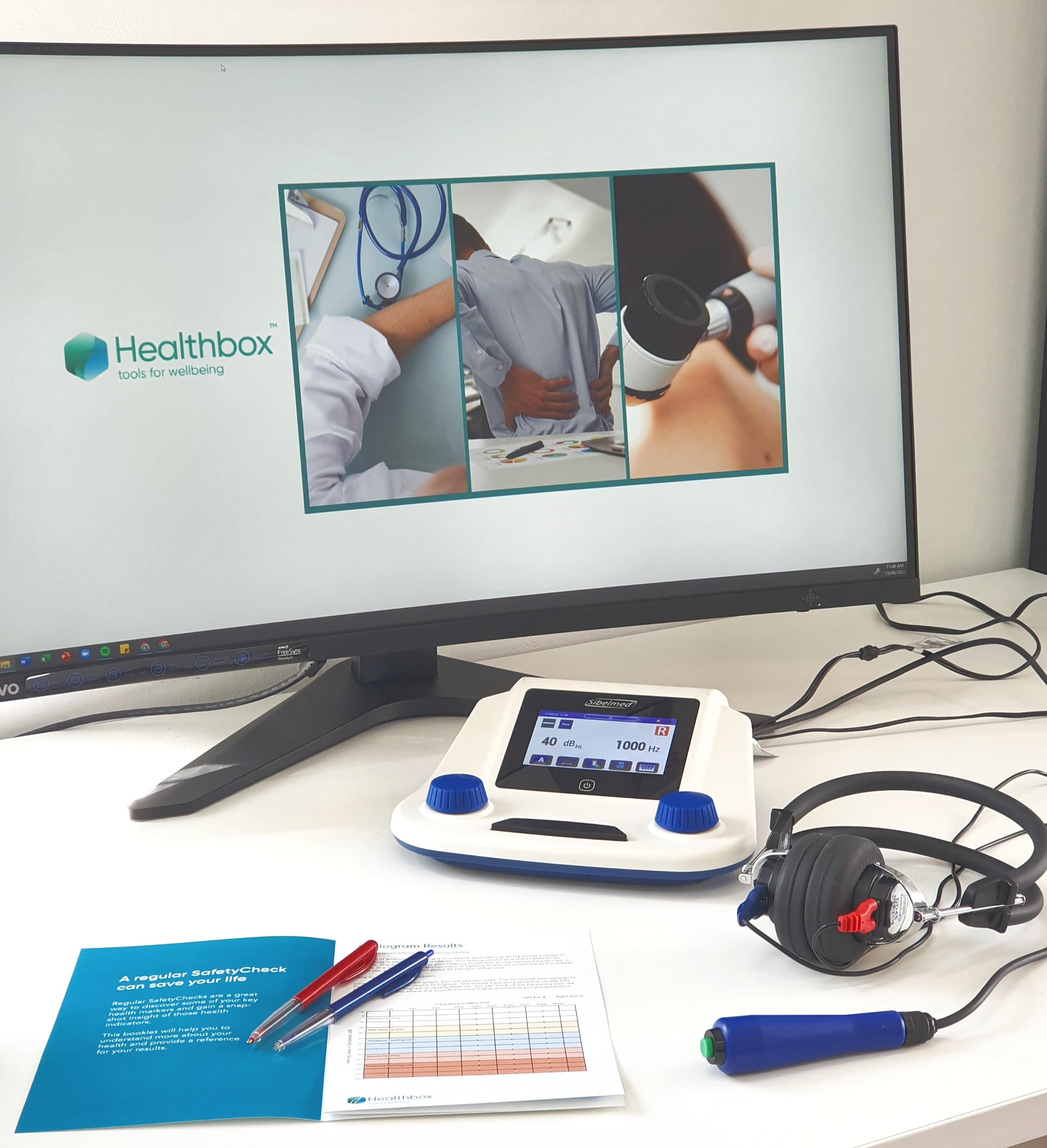
The primary type conducted is pure-tone audiometry testing, which measures a person's ability to hear pure tones at different frequencies. Results are graphed on an audiogram. Abnormal results are referred to specialists or GPs for further investigation.
Legal Requirements for Hearing Tests in New Zealand
The Health and Safety at Work Act 2015 requires employers to take all reasonably practicable steps to ensure worker health and safety, including protecting hearing health. Construction sites, factories, musicians, and office workers using headsets frequently benefit from hearing assessments.
Integrating Hearing Tests with Other Services
Workplace hearing tests can be conducted as standalone appointments or alongside Spirometry testing and Safety Check services. The Healthbox team recommends that all adults have their hearing checked at least once annually.
How Does a Healthbox Hearing Test Work?
Tests are performed by Clinical Exercise Physiologists in a quiet room during 15-minute appointments. A questionnaire is completed, and results are compared to normative New Zealand data. Abnormal results are referred to audiologists or GPs for follow-up.
The Importance of Workplace Hearing Tests
Workplace hearing tests are essential for fostering safe, healthy work environments. They enhance employee well-being and productivity while preventing costly issues. Investing in hearing health today creates a sustainable future for all employees.